Clintonville History header
Clintonville History photos
Clintonville History header
Clintonville History photos

About Clintonville Book

This author has not yet filled in any details.
So far Clintonville Book has created 433 blog entries.

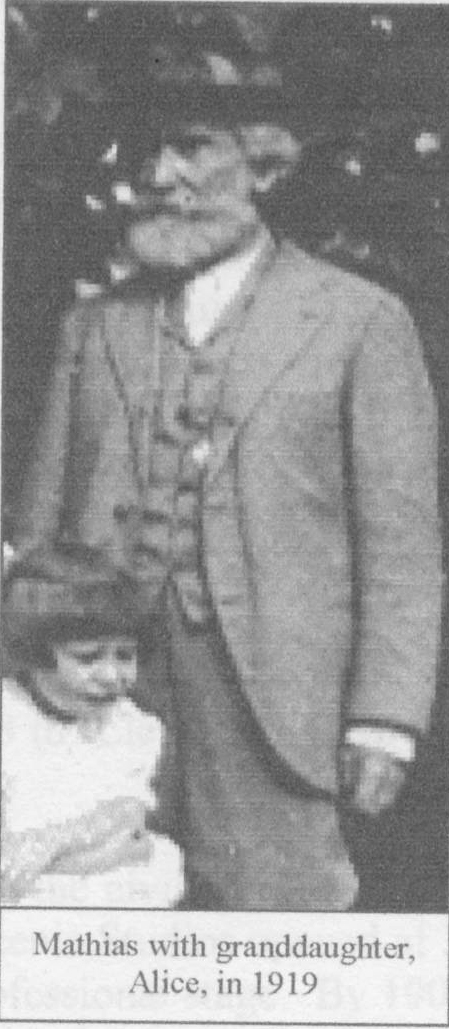
Mathias Armbruster

Two articles are often mentioned as sources for information about Mathias Armbruster. I thought I’d archive them here.

Leeann Faust wrote this wonderful article about her great grandfather Mathias Armbruster. It was originally published in the Polar Bear ROARS Alumni Association (=North High School) newsletter.

Karl Pauly wrote this column way-back-when, about Walhalla ravine–which Armbruster was instrumental in designing, or at the very least, naming. (First article of Leeann Faust; second article courtesy of the Clintonville Historical Society)

2014-11-01T21:26:06+00:00November 1, 2014|Categories: 1900-1940, Houses, People|2 Comments

Beechwold Theatre

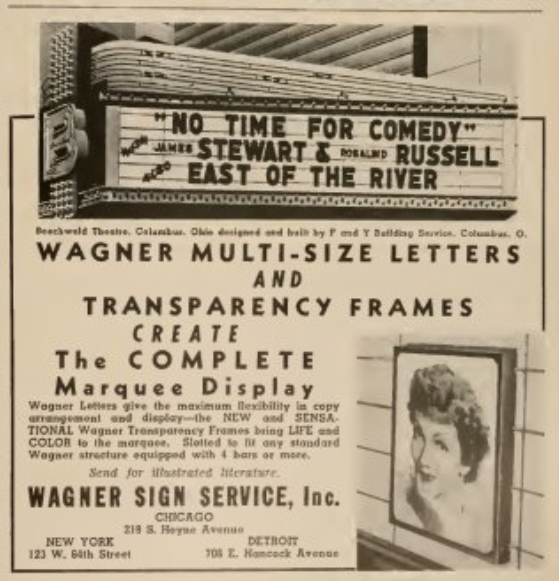
This is an ad that just happens to show the signage of the old Beechwold Theatre at 4250 N. High (aka Camelot North and Drexel North, and currently an athletic club).

The theatre was built by the F & Y Building Service (aka F & Y Construction Company). Mark Fontana informs me that the “Y” in this name is Yassenoff, and the first manager of the Beechwold Theatre was Milton Yassenoff, adopted son of Leo Yassenoff.

If anyone out there is aware of the whereabouts of blueprints, construction photos and high-res b/w photos of the finished theater, please let us know! The ad was shared with me by Mark Fontana, former manager of the Drexel North (aka Camelot North and Beechwold Theater) Mark is a collector. In another place on this web site I link to his web site.

2014-07-01T17:39:22+00:00July 1, 2014|Categories: 1940-present, Businesses, Parks & Recreation|2 Comments

Donald Ross, and the Elks / Wyandot Golf Course

Bill Case has done a wonderful job of researching and writing the history of Donald Ross’ design of the Elks/Wyandot County Club. Check out his web site here. It’s a work in progress so check Bill’s site frequently.

The first picture (to the left) is, of course, Donald Ross. In the left-hand image below, Harold J. Kaufman, John W. Kaufman, Arthur Shannon, Donald Ross, and J.V. Taylor peruse a topo map.

The right-hand image below is the 5th hole–308 yards–par 4. See Bill’s web site for the history and for more image gems.


(Images courtesy of Bill Case and Betty Huber)

2026-02-21T14:35:08+00:00May 1, 2014|Categories: 1900-1940, 1940-present, Parks & Recreation, People|0 Comments

Baseball at the Zoo

The zoo in Beechwold may have been one of the earliest sites of the Columbus Clippers!

According to Joe Santry, Historian at The Columbus Clippers, “In 1895 the Columbus Statesmen opened the season playing at The Zoo Baseball Grounds. The grounds were owned by the Zoological Garden company. Could this be the old zoo grounds in Clintonville? …The team played at the Zoo Grounds for a couple of months before moving to Recreation Park in German Village…

“In 1895, according to the local papers, Columbus played at ‘the Zoo Grounds’ (May 21), ‘Zoo Baseball Park’ (May 4), ‘Zoo Park’ (May 5). There are stories about temporary grandstands, then a ‘new grandstand’ (May 12).

“By June 1, however, the OSJ reports that the club now ‘holds the lease on the Schiller street grounds’ and the club ‘will play the last game on the Zoo grounds this afternoon and the work of removing the grandstand, bleachers, and fences to Recreation Park’ will follow.

“The problem is how inconsistently the papers reported the games that season. The more I research this the more I think the Zoo Grounds park was in or near some type of amphitheatre on the zoo grounds. The park had other smaller attractions prior to 1905.”

Scott Caputo, librarian at the Columbus Metropolitan Library, found this article in the 8-8-1904 Ohio State Journal. It mentions a drill field and a ball game used by several masonic groups at the Zoo. This, shortly before it closed down.

Also linked here is a image/map of the old zoo, courtesy of Mary Rodgers of the Clintonville Historical Society.

New Posts December 2013

Until today, I’ve arranged material on this web site roughly in chronological order; information about earlier events at the top, and more recent history has been put at the end of this web site. For your ease in locating newly posted material, I’ve listed fresh content and any changed entries in the “Recent Postings” category. Arranging the listings this was is quite a bit of labor, though, so as of this month, I’m throwing in the towel. From now on, new postings will be put on the front page, willynilly, regardless of their era.

2013-12-26T15:00:34+00:00December 26, 2013|Categories: Background Info|1 Comment

Sewer pipe factory, and The Mystery of the Pond

John Krygier found a few maps that he was kind enough to share with us: 3 Sanborn maps of the sewer pipe factory (and later, brick yard) formerly occupying the area where old North High currently sits at 100 Arcadia. Interestingly, the ravine behind the factory was apparently dammed, making a significant (and the only?) pond in Clintonville (not sure if the one in Whetstone counts). John requests that if anyone knows of any other sources documenting this pond, to let him know. You can do that by commenting on this post and I will send it along to John.

John also found a map showing the rail grade that connected the sewer pipe factory to the main RR line to the east. The interurban (Columbus, Marion and Delaware) used part of that spur (north of Glen Echo Park) as a bypass.
This Worthington Bypass went from Indianola Ave, east along the top of Glen Echo, then north up what is now the alley along the RR track, then curved west at North Broadway over to and running parallel along Indianola. This curve is preserved in some of the lots around Oakland Park–in particular, the odd orientation of the IndiaOak Tavern is the result of it being built on a curved parcel, part of the old RR right of way. A map of current parcels (with the approximate route of the RR grade) is also attached.

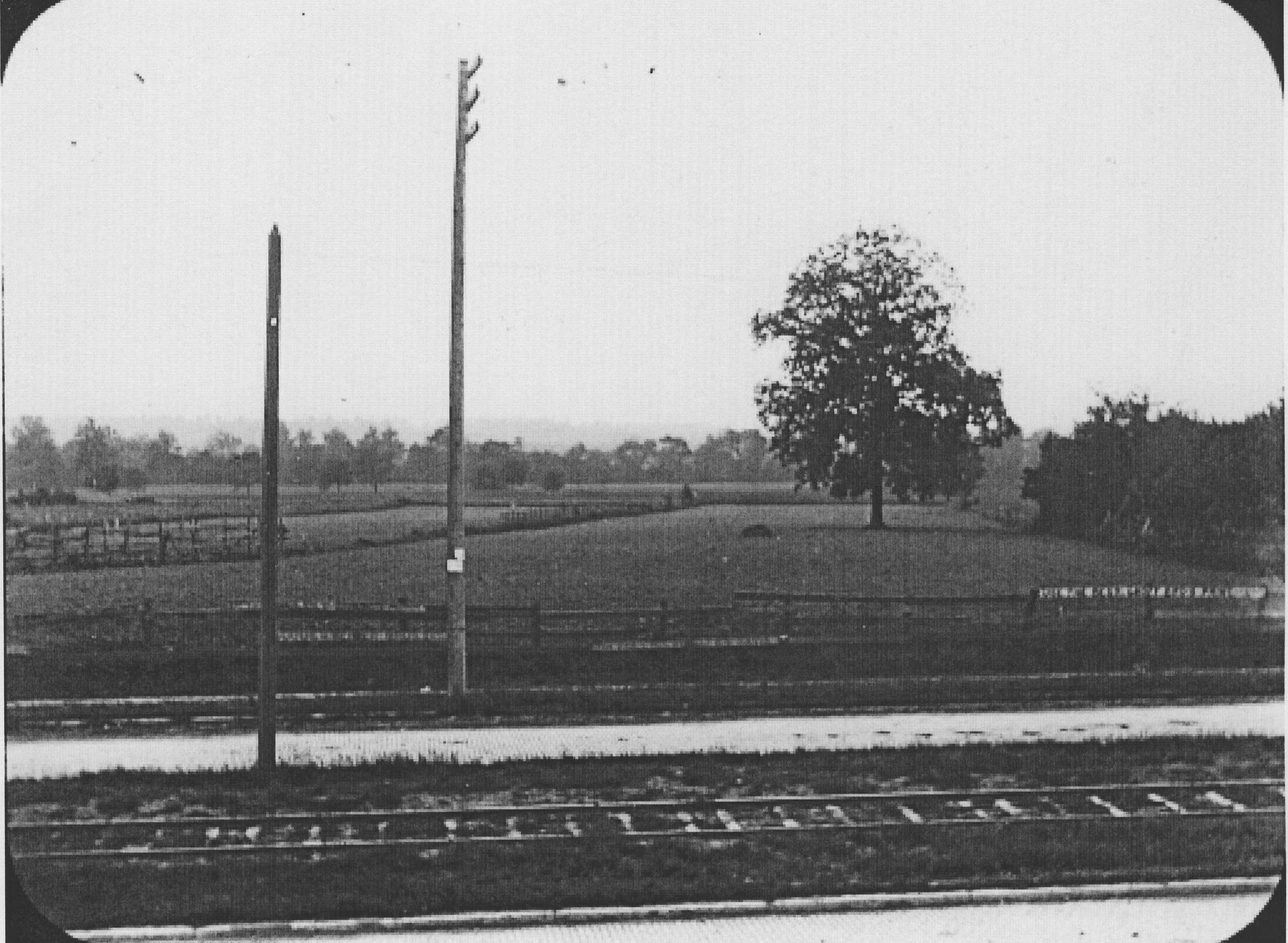
There are 7 photos of this Worthington bypass around the time it was built, showing the eastern end of C-ville at the time, at this web site.

Thanks, John!

(Photos courtesy of John Krygier)

2013-12-26T14:52:31+00:00December 26, 2013|Categories: 1800s, 1900-1940, Businesses, Transportation|Tags: |3 Comments
Go to Top